Key Takeaways
- AI speech analytics analyzes spoken words to understand what customers say, while conversation analytics software focuses on why they say it.
- AI speech analytics detects keywords, sentiment, and compliance in calls; conversation analytics reviews meaning and intent across diverse communication channels.
- Together, these tools enhance performance measurement and customer experience in call centers.
- AI speech analytics also improves compliance by identifying missed disclosures and ensuring consistent agent performance.
- Understanding both analytics types enables smarter coaching and better decision-making in contact centers.
Estimated reading time: 5 minutes
Table of contents
- What Is AI Speech Analytics?
- What Is Conversation Analytics Software?
- Key Differences Between AI Speech Analytics and Conversation Analytics
- How AI Speech Analytics Improves Compliance
- The Role of AI in Future Call Center Analytics
- Key Takeaways
- FAQs
- See beyond the words — and hear what matters most.
- You May Also Be Interested In…
The modern contact center runs on data — every customer interaction, every phrase, and every tone carries meaning. But understanding that meaning requires more than recording calls. It requires AI speech analytics and conversation analytics software, two technologies that extract insight from human language in very different ways.
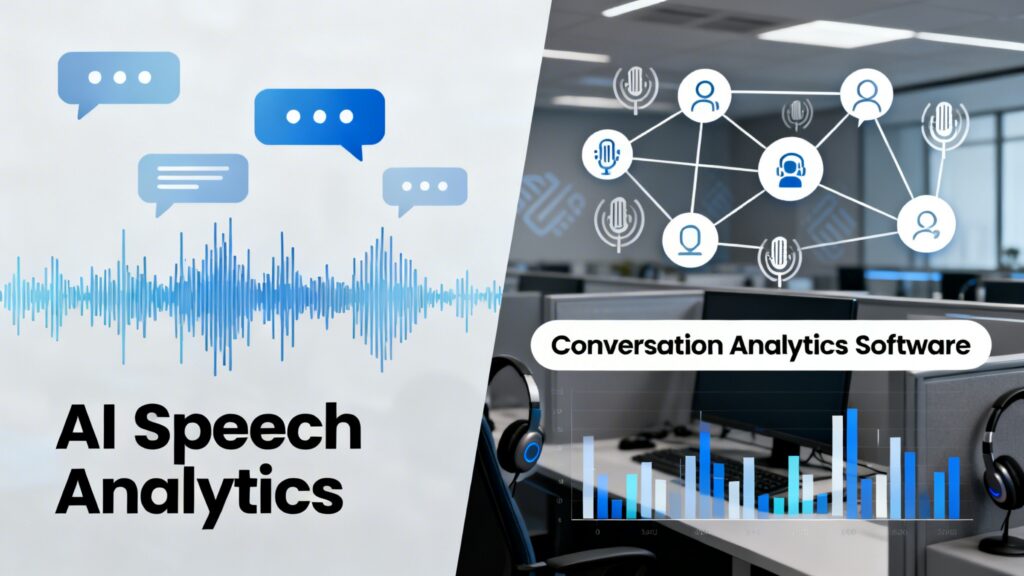
Both tools listen, but one focuses on what was said, while the other understands why it was said. Knowing the difference between them helps call centers choose the right system for performance, compliance, and customer satisfaction.
What Is AI Speech Analytics?
AI speech analytics focuses on analyzing the words that are spoken during customer interactions.
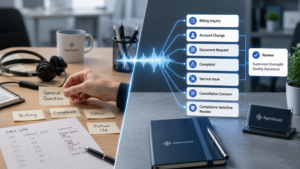
Using transcription and natural language processing, it converts spoken conversations into text and evaluates that text for:
- Keywords and phrases
- Topics and themes
- Intent inferred from language
- Keyword-based sentiment indicators
- Compliance detection (such as whether required disclosures were spoken)
- Conversation summaries
With AI speech analytics, call centers gain clarity into what was said and what it means, based on the linguistic content of the conversation — not how it sounded.
For example, if a customer says, “I’m frustrated because my bill keeps going up,” the system flags frustration based on the language used, not vocal tone or inflection.
This makes AI speech analytics especially valuable for quality assurance, compliance monitoring, and understanding customer concerns at scale.
What Is Conversation Analytics Software?
While speech analytics focuses on sound and emotion, conversation analytics software looks at the content and context of communication.
It transcribes spoken words into text, analyzes sentiment, and identifies recurring themes across thousands of interactions.
Beyond phone calls, conversation analytics software also ingests chat, email, and other text-based channels, giving teams visibility into customer sentiment across every medium — not just voice.
Instead of focusing solely on tone, it helps leaders understand what customers are talking about — their concerns, preferences, and intent.
For example:
- AI speech analytics might detect customer frustration.
- Conversation analytics software identifies why the customer is frustrated — such as long hold times or unclear billing information.
Together, they form a complete feedback loop: the “how” (speech analytics) and the “why” (conversation analytics).
Key Differences Between AI Speech Analytics and Conversation Analytics
| Feature | AI Speech Analytics | Conversation Analytics Software |
| Primary Focus | Linguistic content of spoken calls | Meaning, themes, and trends across interactions |
| Input Type | Transcribed voice calls | Transcribed calls, chat, email, and text |
| Analysis Scope | Keywords, phrases, intent, compliance language | Topics, patterns, sentiment trends, customer intent |
| Sentiment Approach | Keyword-based sentiment from spoken language | Aggregated, keyword-based sentiment across channels |
| Core Value | Understanding what was said | Understanding why customers are contacting you |
| Ideal Use Cases | QA, compliance checks, conversation summaries | CX analysis, trend identification, operational insight |
In short:
- AI speech analytics helps teams understand the message within spoken calls.
- Conversation analytics software expands that understanding across large volumes of interactions to reveal patterns, trends, and insights.
Used together, they provide a complete view of customer communication — without relying on tone, pitch, or emotional detection from audio signals.
How AI Speech Analytics Improves Compliance

One of the most powerful benefits of AI speech analytics is compliance assurance.
In industries like finance, healthcare, and insurance, a single missed disclosure or emotional escalation can be costly.
By using call center speech tools that analyze tone and phrasing in real time, organizations can:
- Detect when mandatory phrases (like legal disclaimers) are skipped
- Ensure consistency across agents through automated QA scoring
Meanwhile, voice analytics AI supports supervisors with post-call insights, identifying trends in agent tone or customer response that may point to procedural issues.
AI doesn’t replace compliance departments — it gives them better tools, faster alerts, and complete traceability.
The Role of AI in Future Call Center Analytics
The future of AI speech analytics and conversation analytics software is focused on refinement and scale, not speculative emotional prediction.
As analytics capabilities mature, organizations will continue to:
- Improve transcription accuracy
- Enhance keyword-based sentiment classification
- Strengthen contextual understanding from language
- Expand analysis across voice, chat, and email
- Deliver clearer, more actionable reporting
Rather than predicting emotion or detecting vocal stress, next-generation systems will focus on helping teams understand communication patterns, identify emerging issues, and support more consistent agent performance.
As speech and conversation analytics evolve together, call centers gain a clearer picture of both individual interactions and organization-wide trends — enabling smarter coaching, better compliance oversight, and more informed CX decisions.
Key Takeaways
- AI speech analytics focuses on keywords, sentiment,, and compliance within spoken calls.
- Conversation analytics software interprets meaning, intent, and sentiment from transcribed conversations.
- Together, they transform how call centers measure performance and customer experience.
- Analytics-driven insight helps teams strengthen compliance oversight and agent development.
Understanding the difference is the first step to building an intelligent, responsive contact center.
FAQs
AI speech analytics examines keywords and sentiment within a call, while conversation analytics software focuses on the meaning and topics discussed through text-based analysis.
Neither stands alone. Together, they create complete customer visibility.
By analyzing transcribed conversations for required language, keywords, and process steps, AI helps identify missed disclosures and supports consistent compliance review.
See beyond the words — and hear what matters most.
Experience how AgentAssist combines AI speech analytics and conversation analytics to deliver real-time insight, compliance confidence, and customer satisfaction.