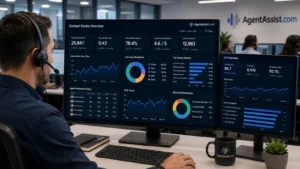

Key Takeaways
- PII redaction call center helps protect sensitive customer information in call recordings and transcripts.
- It limits unnecessary exposure of personal, financial, and account-related details while preserving useful data.
- Customizable redaction allows contact centers to tailor what information to hide based on specific needs.
- PII redaction connects with workflows like QA review and coaching without compromising context or compliance.
- AgentAssist.com provides a platform for effective PII redaction and conversation analytics integration.
Estimated reading time: 14 minutes
Table of contents
- What Is PII Redaction in a Call Center?
- Why PII Redaction Matters in Call Centers
- Where Sensitive Data Appears in Contact Center Conversations
- PII Redaction Is Not the Same as Deleting the Conversation
- How PII Redaction Supports Conversation Analytics
- How PII Redaction Supports QA Review
- How PII Redaction Supports Compliance-Risk Review
- How PII Redaction Connects With Case Management
- How PII Redaction Supports Agent Coaching
- Why Customizable Redaction Matters
- What Contact Centers Should Avoid
- What to Look for in PII Redaction and Conversation Analytics Software
- How AgentAssist.com Helps Contact Centers Protect Sensitive Conversation Data
- Final Thoughts
- Key Takeaways
- Ready to protect sensitive customer information while improving conversation analytics?
- Sources Used
PII redaction in call centers helps protect sensitive customer information inside call recordings, transcripts, reports, and review workflows. For modern contact centers, this matters because customer conversations often include personal, financial, account-related, or other sensitive details that should not be unnecessarily exposed across the organization.
Every customer conversation creates data. A customer may share their name, address, date of birth, account number, payment details, claim information, medical-related context, authentication details, or other private information. That information may be useful during the live interaction, but it does not always need to remain visible in every transcript, call review, QA workflow, analytics report, or coaching session.
This is where PII redaction becomes important. Instead of treating all conversation data the same, contact centers can use redaction workflows to help limit exposure of sensitive information while still preserving the operational value of the conversation.
AgentAssist.com supports this need through its Conversation Analytics platform, which includes the ability to customize redaction of PII and other sensitive data. This connects customer data protection with search, filtering, saved searches, call review, reporting, QA, case management, and broader contact center analytics.
What Is PII Redaction in a Call Center?
PII redaction is the process of removing, hiding, masking, or restricting sensitive personal information from customer conversation records. In a call center, that may include redacting information from call transcripts, recordings, analytics views, QA review screens, reports, or other places where conversation data is used.
PII generally refers to information that can identify or be linked to a person. In contact center conversations, this may include obvious identifiers like a customer’s name, phone number, address, email address, account number, or date of birth. It may also include sensitive details such as payment information, authentication details, claim numbers, health-related information, or other account-specific data.
The practical goal is simple: keep the useful business context of the conversation while limiting unnecessary exposure of sensitive customer details.
For example, a supervisor may need to know that a customer called about a billing dispute. The supervisor may not need to see the full payment details. A QA reviewer may need to evaluate whether the agent followed the correct process. The reviewer may not need to see every piece of personal information the customer shared. A reporting dashboard may need to show trends around account verification issues. It does not need to expose individual customer identifiers.
Why PII Redaction Matters in Call Centers
Call centers collect large amounts of conversation data. That data is valuable because it helps teams understand customer needs, improve workflows, review agent performance, monitor quality, and identify business trends. But the more customer data a contact center stores and shares internally, the more carefully it needs to manage access and exposure.
PII redaction helps contact centers create a safer operating model for conversation data. It can support customer data protection by reducing the amount of sensitive information visible to people who do not need it for their role.
This matters across multiple workflows.
QA teams may review calls for policy adherence and customer experience. Supervisors may use transcripts for coaching. Compliance teams may review flagged conversations. Operations leaders may analyze reports. Product or customer experience teams may look for recurring issues. Each team may need access to conversation insights, but not every team needs access to every sensitive customer detail.
PII redaction helps make that separation more practical.
The Federal Trade Commission’s business guidance on protecting personal information emphasizes the need for companies to safeguard sensitive information and control access to it. That general principle fits the contact center environment, where call recordings and transcripts may contain large amounts of customer data.
Where Sensitive Data Appears in Contact Center Conversations
Sensitive data can appear in more places than teams realize. It may appear in the live call, the call transcript, the recording, the post-call summary, the CRM note, the QA scorecard, the case management record, or the analytics report.
A customer may provide sensitive information during identity verification. An agent may repeat information back to confirm accuracy. A customer may reference account details while explaining an issue. A payment conversation may include card-related details or billing information. A complaint call may include personal context that should not be widely visible.
Common examples of sensitive call center data include:
- Customer names
- Email addresses
- Phone numbers
- Mailing addresses
- Account numbers
- Claim numbers
- Payment details
- Authentication answers
- Dates of birth
- Government ID references
- Health-related details
- Complaint details
- Financial hardship information
- Internal customer notes
- Sensitive service history
Not all of this information has the same sensitivity level. Some details may need to be visible to certain roles and hidden from others. That is why customizable redaction is important.
PII Redaction Is Not the Same as Deleting the Conversation
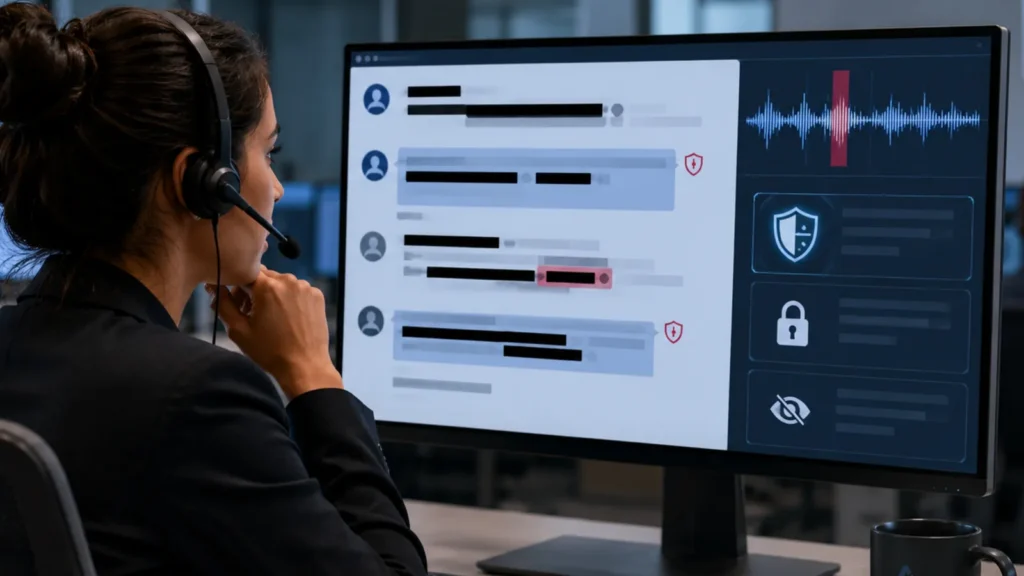
Redaction does not necessarily mean deleting the whole call, transcript, or record. It means limiting exposure of specific sensitive details inside the conversation data.
This distinction matters. Contact centers still need conversation records for QA, training, reporting, compliance-risk review, customer experience improvement, and operational analysis. If every call containing sensitive information were removed entirely, teams would lose important context.
PII redaction helps preserve the value of conversation analytics while reducing unnecessary data exposure.
For example, a transcript may still show that the customer called about account access, the agent completed verification, the issue required follow-up, and the customer requested a supervisor. The sensitive account details can be redacted while the operational meaning of the conversation remains available.
That balance is the real value.
How PII Redaction Supports Conversation Analytics
Conversation analytics helps contact centers search, filter, review, and report on customer interactions. But when conversations include sensitive customer data, analytics workflows need safeguards.
AgentAssist.com Conversation Analytics platform supports search, more than 20 filters, saved searches, call review, insight extraction, customized reports, and customizable redaction of PII and other sensitive data. This means contact centers can analyze conversations while also creating a better structure for managing sensitive information.
PII redaction supports conversation analytics in several ways. It can help teams review calls more safely, share insights with fewer sensitive details exposed, create reports that focus on trends instead of private identifiers, and support QA or coaching workflows without showing unnecessary customer information.
This is especially important when conversation analytics is used by multiple departments. A compliance reviewer may need deeper access than a general operations manager. A supervisor may need enough context to coach an agent, but not every sensitive detail from the customer’s account. A leadership dashboard may need trend data, not personal data.
Redaction helps make conversation analytics more usable across the organization.
How PII Redaction Supports QA Review
QA teams need to evaluate calls for agent performance, workflow adherence, accuracy, customer experience, and procedure compliance. But QA reviewers do not always need to see every sensitive detail a customer shares.
PII redaction can help QA teams focus on the quality of the interaction rather than unnecessary customer identifiers.
A QA reviewer may need to evaluate whether the agent:
- Followed the correct verification process
- Explained the next step clearly
- Used required language
- Documented the outcome
- Escalated the issue when needed
- Handled the customer request accurately
- Protected sensitive information during the conversation
In many cases, those review goals can be achieved without exposing all customer-specific details.
AgentAssist.com Automated QA platform supports customized automated scorecards, multiple scorecards per call or agent, scoring rationale, and reporting. When automated QA works alongside redaction and conversation analytics, contact centers can review more interactions while supporting better data protection practices.
How PII Redaction Supports Compliance-Risk Review
PII redaction can help contact centers reduce compliance risk by limiting unnecessary exposure of sensitive customer information during review workflows. Redaction helps reduce risk, but it does not guarantee compliance.
Compliance-sensitive conversations may involve required disclosures, customer complaints, identity verification, payment-related topics, account access, sensitive personal details, or other regulated workflows. These calls may need review, but that review should be handled carefully.
A strong compliance-risk review process may include three layers.
First, the contact center identifies conversations that may need review. Second, the right reviewer evaluates the interaction. Third, the organization documents findings and takes action when needed.
PII redaction supports that process by helping reduce unnecessary access to sensitive details during review.
How PII Redaction Connects With Case Management
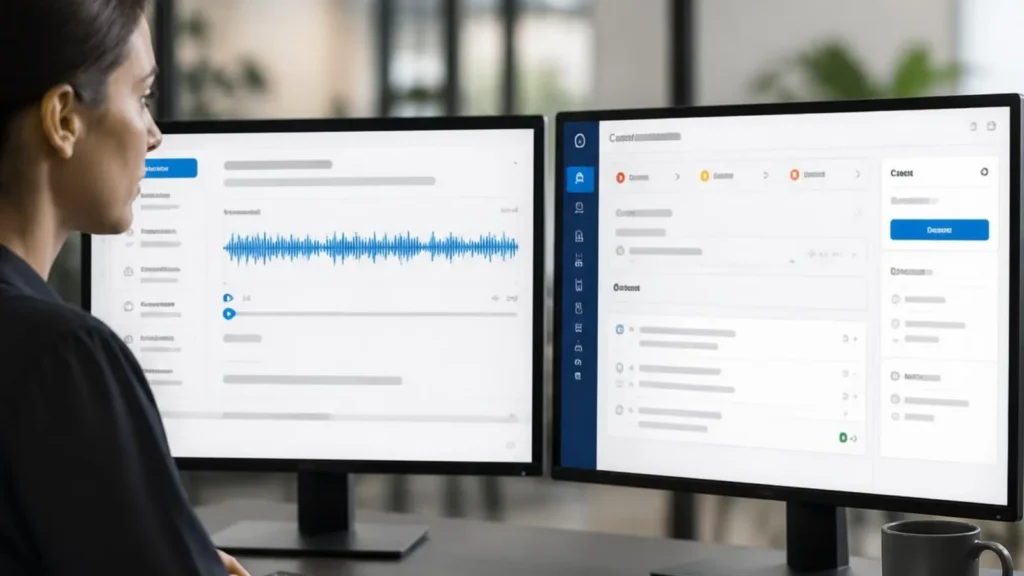
Some conversations that include sensitive data may also require case review. For example, a customer may mention a complaint, unauthorized activity, account access concern, or repeated unresolved issue. The call may need to be flagged, reviewed, documented, and possibly escalated.
AgentAssist.com Case Management solution helps teams create customized cases, review flagged calls, classify non-issues, add notes, send alerts, notify key team members, and generate customized reports. Its page specifically describes customized cases related to compliance, service, fraud, risk, and other priorities.
When case management connects with redaction, teams can review important conversations without exposing more sensitive information than necessary. A reviewer can focus on the issue, the call context, the escalation reason, and the next step.
This matters because case records can involve collaboration. Notes, alerts, and follow-up actions may be seen by multiple people. Redaction helps reduce the chance that unnecessary personal data becomes part of a broader workflow.
How PII Redaction Supports Agent Coaching
Agent coaching often relies on real examples. Supervisors need to show agents what happened in a conversation, where the workflow was followed, where improvement is needed, and how future calls should be handled.
But coaching does not always require full exposure of sensitive customer information.
PII redaction can make coaching workflows safer and more focused. Supervisors can discuss the call structure, process steps, communication clarity, escalation handling, or documentation quality without exposing unnecessary customer identifiers.
For example, a coaching moment may focus on how the agent explained a policy. The customer’s address or account number may not be relevant. A coaching session may focus on how the agent handled a complaint. The reviewer may not need the customer’s personal financial details to understand the coaching point.
AgentAssist.com Agent Coaching platform supports coaching workflows through tasks, notes, timestamps, alerts, and reporting. When coaching is connected to redacted conversation data, supervisors can use real examples while reducing unnecessary exposure.
Why Customizable Redaction Matters
Not every contact center has the same redaction needs. A healthcare support team, financial services contact center, insurance operation, utility provider, retail support center, or software support team may each handle different types of sensitive information.
That is why customizable redaction matters.
A generic redaction setup may miss important business-specific details. It may also hide too much information and make the transcript less useful. The best approach is to create redaction rules that match the company’s real workflows, customer data types, review needs, and risk areas.
For example, one organization may need to focus heavily on payment information and account numbers. Another may need to prioritize claim details, policy numbers, identity verification answers, or sensitive service history.
AgentAssist.com Conversation Analytics page specifically mentions the ability to customize redaction of PII and other sensitive data. This is an important product fit for contact centers that need conversation analytics without unnecessary customer data exposure.
What Contact Centers Should Avoid
PII redaction is useful, but it should not be treated as a complete data protection strategy by itself. It should be part of a broader system that includes access controls, policies, training, secure handling of information, review workflows, and clear internal responsibilities.
Contact centers should avoid three common mistakes.
First, they should avoid giving too many people full access to unredacted conversations. Not every role needs the same level of detail.
Second, they should avoid redacting without thinking about usability. If too much information is hidden, reviewers may lose the context needed for QA, coaching, or case review.
Third, they should avoid assuming redaction guarantees compliance. Redaction can help reduce risk, but organizations still need appropriate policies, oversight, and legal or compliance guidance based on their industry.
The goal is balance. Protect sensitive information while keeping conversation data useful enough to improve operations.
What to Look for in PII Redaction and Conversation Analytics Software
When evaluating PII redaction capabilities for a call center, leaders should look beyond whether a tool can hide information. They should ask how redaction fits into the full contact center workflow.
Important capabilities include:
- Customizable PII redaction
- Sensitive data redaction
- Accurate transcription support
- Conversation search
- Filters and saved searches
- Role-aware review workflows
- QA scorecard connection
- Case management connection
- Coaching workflow support
- Custom reporting
- Secure handling of customer data
- Ability to preserve useful conversation context
The best redaction workflow is not isolated. It should connect with conversation analytics, automated QA, case management, coaching, call summarization, and reporting.
That is where AgentAssist.com fits. Its Conversation Analytics platform supports customizable redaction, filters, saved searches, call review, insight extraction, and reporting. Its broader platform connects those insights to Automated QA, Case Management, Agent Coaching, Call Summarization, Real-Time Assist, and Analytics.
How AgentAssist.com Helps Contact Centers Protect Sensitive Conversation Data

AgentAssist.com helps contact centers use conversation analytics while supporting more careful handling of sensitive customer information.
With AgentAssist.com, contact centers can use customizable redaction of PII and other sensitive data within Conversation Analytics. This helps teams review calls, extract insights, create reports, search conversations, and support QA workflows while reducing unnecessary exposure of private details.
The broader value is not just redaction. The value is connecting redaction to the workflows that use conversation data every day.
A contact center can analyze trends, review QA performance, flag cases, coach agents, summarize calls, and build reports while maintaining a more thoughtful approach to customer data protection.
Final Thoughts
PII redaction in call centers is an important part of protecting customer information while still using conversation data to improve the business. Call recordings and transcripts often contain sensitive details. Those details may be necessary during the live interaction, but they do not always need to remain visible in every review, report, coaching session, or analytics workflow.
Conversation analytics becomes more valuable when it includes safeguards for sensitive data. Redaction helps contact centers preserve useful context while limiting unnecessary exposure.
AgentAssist.com supports this through its Conversation Analytics platform, including customizable redaction of PII and other sensitive data. When connected with Automated QA, Case Management, Agent Coaching, Call Summarization, Real-Time Assist, and Analytics, PII redaction becomes part of a stronger system for customer data protection, operational insight, and compliance-risk reduction.
Key Takeaways
- PII redaction helps call centers reduce unnecessary exposure of sensitive customer information.
- Call recordings and transcripts may contain names, account details, payment information, authentication details, addresses, and other sensitive data.
- Redaction is most useful when it connects with conversation analytics, QA review, case management, coaching, and reporting workflows.
- PII redaction should support compliance-risk reduction, but it should not be described as guaranteeing compliance.
- AgentAssist.com helps contact centers customize redaction of PII and sensitive data within its Conversation Analytics platform.
PII redaction in a call center is the process of removing, masking, or hiding sensitive personal information from call recordings, transcripts, reports, or review workflows.
Sensitive information may include names, addresses, phone numbers, email addresses, account numbers, payment details, dates of birth, authentication details, claim numbers, and other private customer information.
Conversation analytics helps teams search, review, and report on customer interactions. PII redaction helps reduce unnecessary exposure of sensitive customer information during those workflows.
No. PII redaction can help reduce compliance risk, but it does not guarantee compliance. Contact centers still need appropriate policies, access controls, training, and oversight.
Redaction helps QA reviewers and supervisors evaluate real conversations while limiting exposure of customer details that may not be needed for review or coaching.
AgentAssist.com supports customizable redaction of PII and other sensitive data through its Conversation Analytics platform. This connects with broader workflows such as Automated QA, Case Management, Agent Coaching, Call Summarization, Real-Time Assist, and Analytics.
Ready to protect sensitive customer information while improving conversation analytics?
See how AgentAssist.com helps contact centers customize PII redaction, review calls, generate reports, and turn customer conversations into safer, more actionable insights. Book a demo today.
Sources Used
- AgentAssist.com — Conversation Analytics
https://agentassist.com/platform/conversation-analytics/ - AgentAssist.com — Automated QA
https://agentassist.com/platform/automated-qa/ - AgentAssist.com — Case Management
https://agentassist.com/platform/case-management/ - AgentAssist.com — Agent Coaching
https://agentassist.com/platform/agent-coaching/ - AgentAssist.com — Call Summarization
https://agentassist.com/platform/call-summarization/ - AgentAssist.com — Real-Time Assist
https://agentassist.com/platform/real-time-assist/ - AgentAssist.com — Analytics
https://agentassist.com/platform/analytics/ - AgentAssist.com — Homepage
https://agentassist.com/ - FTC — Protecting Personal Information: A Guide for Business
https://www.ftc.gov/business-guidance/resources/protecting-personal-information-guide-business-0 - Google Search Central — Creating Helpful, Reliable, People-First Content
https://developers.google.com/search/docs/fundamentals/creating-helpful-content