Key Takeaways
- Call reason analytics helps contact centers understand why customers call, revealing underlying issues and improving workflows.
- Repeat calls often indicate unresolved problems or confusing processes, impacting customer experience and operational efficiency.
- AI-powered call classification organizes calls by intent and issue type, supporting better reporting and coaching.
- AgentAssist.com enhances call reason analytics with features like conversation analytics, automated QA, and agent coaching workflows.
- By addressing root causes highlighted by call reason analytics, contact centers can improve the customer experience and reduce unnecessary workload.
Estimated reading time: 12 minutes
Table of contents
- What Is Call Reason Analytics?
- Why Repeat Calls Are a Problem
- How Call Reason Analytics Helps Identify Root Causes
- Call Reason Analytics and Call Classification
- How Call Reason Analytics Supports Contact Center Reporting
- How Call Reason Analytics Supports QA
- How Call Reason Analytics Supports Agent Coaching
- How Call Reason Analytics Supports Case Management
- How Call Summarization Helps Reduce Repeat Calls
- Common Repeat Call Drivers Contact Centers Should Track
- What to Look for in Call Reason Analytics Software
- How AgentAssist.com Helps Contact Centers Use Call Reason Analytics
- Key Takeaways
- FAQs
- Ready to understand why customers keep calling?
- Helpful Resources
- You May Also Be Interested In…
Call reason analytics helps contact centers understand why customers are calling, which issues are repeated most often, and where operational friction may be creating unnecessary contact volume. Instead of only measuring how many calls came in, call reason analytics helps teams understand the reasons behind those calls.
That difference matters. If customers keep calling about the same billing confusion, account issue, document request, payment problem, or service question, the contact center may be dealing with a deeper workflow problem. The issue may not be the agent. It may be unclear instructions, a broken self-service path, a confusing policy, poor customer communication, or an unresolved process gap.
AgentAssist.com offers Call Classification and Conversation Analytics tools that help contact centers organize conversations by customer intent, call reason, and topic. This helps teams identify trends, review calls by classification, generate reports, and find opportunities to improve customer experience, efficiency, and risk management.
What Is Call Reason Analytics?
Call reason analytics is the process of analyzing customer conversations to understand why people contact a business. It helps contact centers organize calls into meaningful categories such as billing questions, payment issues, account changes, complaint calls, service problems, cancellation concerns, document requests, or technical support needs.
In a traditional contact center, call reasons may be tracked through manual disposition codes. After a call, the agent selects a code that describes the interaction. While this can be useful, it may not always capture the full reason behind the call.
Call reason analytics goes deeper. It looks at the conversation itself and helps identify patterns across large volumes of interactions. This can help managers see which customer issues are increasing, which workflows are creating repeat calls, and which topics may need better support.
For example, a contact center may discover that a large number of calls are related to:
- Customers not understanding a billing statement
- Customers unable to complete an online account update
- Customers asking about the same document requirement
- Customers calling again after an unresolved service request
- Customers confused by a policy change
- Customers needing help with payment setup
- Customers asking for a supervisor after a prior interaction
When these patterns become visible, contact center leaders can take action.
Why Repeat Calls Are a Problem

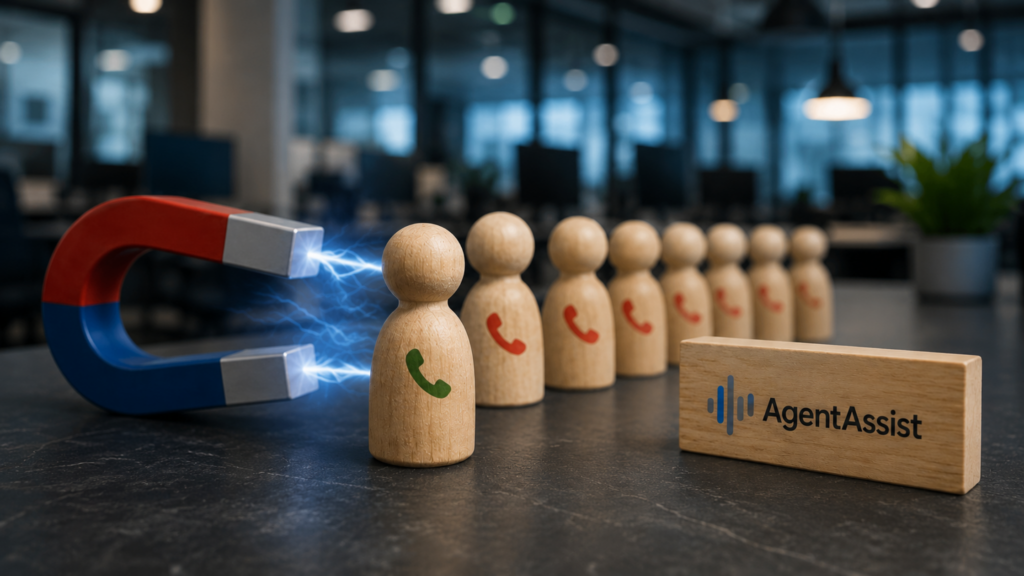
Repeat calls happen when customers contact the business multiple times about the same issue or related issue. Sometimes this happens because the original problem was not resolved. Other times it happens because the customer did not receive clear instructions, could not complete a task, or had to follow up due to missing information.
Repeat calls can create several problems for contact centers.
First, repeat calls increase workload. If customers keep calling about the same issue, agents spend more time handling conversations that may have been preventable.
Second, repeat calls can hurt customer experience. Customers do not want to explain the same problem multiple times. When they have to call again, frustration can increase.
Third, repeat calls can hide operational problems. If leaders only look at call volume, they may miss the reason behind the volume. A spike in calls may look like a staffing problem when it is actually a process problem.
Fourth, repeat calls can create coaching confusion. Managers may assume agents need more training when the real issue may be unclear customer communication, poor self-service design, or a broken workflow.
Call reason analytics helps contact centers separate symptoms from root causes.
How Call Reason Analytics Helps Identify Root Causes
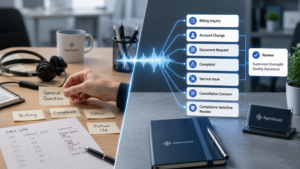
Call reason analytics helps teams understand the pattern behind customer contact. Instead of viewing each call as an isolated event, leaders can group conversations by issue type and look for repeated themes.
A useful call reason analytics workflow may look like this:
- Customer conversations are captured and transcribed.
- Calls are classified by reason, topic, customer intent, or issue type.
- Managers review dashboards, reports, filters, and saved searches.
- Repeat call categories are identified.
- QA, operations, coaching, or compliance teams review selected interactions.
- Leaders identify whether the issue is caused by agent performance, customer confusion, process friction, or another operational gap.
- The business improves scripts, training, self-service content, policies, workflows, or customer communication.
This turns call reason analytics into a practical improvement system.
For example, if many customers call about “document verification,” the company may need clearer instructions before the customer reaches the agent. If many customers call about “payment setup,” the payment process may need to be simplified. If many customers call back after a service request, the follow-up process may need better tracking.
Call Reason Analytics and Call Classification
Call reason analytics depends on accurate call classification. If calls are not categorized clearly, managers may not trust the data.
AgentAssist.com Call Classification solution is designed to help businesses understand why customers are contacting them. The platform supports customizable intent structures, the ability to listen to calls by classification, and intent trend tracking.
This matters because call reason analytics is only useful when the categories reflect real customer issues.
A strong call classification structure may include:
- Billing issue
- Account access
- Document request
- Technical support
- Product question
- Cancellation concern
- Complaint language
- Payment assistance
- Service follow-up
- Policy confusion
- Escalation request
- Compliance-sensitive topic
With this type of structure, teams can track customer contact reasons more clearly. They can also identify whether certain call types are increasing, decreasing, or tied to other performance indicators.
How Call Reason Analytics Supports Contact Center Reporting
Contact center reporting becomes more useful when leaders can see call reasons, not just call counts.
A basic report may show that the contact center received more calls this week. A stronger call reason analytics report may show that call volume increased because more customers called about payment confusion after a billing communication was sent.
That is a very different insight.
Call reason analytics can help answer questions such as:
- What are the top reasons customers are calling?
- Which call reasons are increasing over time?
- Which issues are creating repeat calls?
- Which call reasons are tied to longer conversations?
- Which topics lead to more escalations?
- Which issues may require better self-service content?
- Which categories should QA teams review more closely?
- Which agent groups may need targeted coaching?
AgentAssist.com Analytics platform supports customizable dashboards and reports. Its Conversation Analytics platform also supports filters, saved searches, call review, insight extraction, and customized reports.
Together, these capabilities help contact centers move from surface-level reporting to more useful operational insight.
How Call Reason Analytics Supports QA
Call reason analytics can make QA review more targeted. Instead of reviewing only random call samples, QA teams can focus on calls tied to specific reasons or risk areas.
For example, QA leaders may want to review:
- Repeat billing issue calls
- Cancellation-related calls
- Complaint calls
- Calls involving required disclosures
- Calls with escalation language
- Long calls tied to unresolved issues
- Calls involving sensitive customer information
- Calls where customers mention a prior unresolved interaction
This helps QA teams spend more time on calls that matter. It also helps them understand whether an issue is related to agent performance, process design, or customer confusion.
AgentAssist.com Automated QA platform supports custom automated scorecards and quality monitoring workflows. When call reason analytics is connected with automated QA, leaders can evaluate customer conversations with more context.
How Call Reason Analytics Supports Agent Coaching
Repeat calls can reveal coaching opportunities, but managers need the right context before coaching agents.
For example, if an agent repeatedly handles calls about billing confusion, that does not automatically mean the agent is causing the issue. It may mean customers are confused before they ever reach the agent.
Call reason analytics helps supervisors identify patterns such as:
- Agents needing support with specific call types
- Call categories that often lead to longer conversations
- Topics where agents may need clearer guidance
- Processes that create customer confusion
- Calls where a supervisor escalation may have been avoided
- Common questions new agents struggle to answer
AgentAssist.com Agent Coaching platform is designed to help supervisors connect insights to coaching workflows. This can include tasks, notes, alerts, timestamps, and reporting.
The goal is not just to identify problems. The goal is to create a feedback loop where insights lead to better coaching and stronger performance.
How Call Reason Analytics Supports Case Management

Some repeat calls may need more than reporting or coaching. They may need supervisor review, escalation, or follow-up.
This is where call reason analytics connects with case management.
If a conversation includes certain keywords, categories, metadata, or issue patterns, it may need to be flagged for review. This can help supervisors focus on calls that may involve complaints, service issues, compliance-sensitive topics, fraud-risk conversations, or unresolved customer problems.
AgentAssist.com Case Management solution helps teams review flagged calls, classify cases, mark non-issues, add notes, send alerts, and escalate concerns with fewer manual steps.
This is important because reducing repeat calls is not only about analytics. It is about taking action on the right conversations.
How Call Summarization Helps Reduce Repeat Calls
Call reason analytics can also work alongside call summarization.
When agents or supervisors have access to clearer call summaries, they can better understand what happened during the previous interaction. This can help reduce confusion when a customer calls again.
AgentAssist.com Call Summarization platform is designed to provide concise summaries of customer conversations, including key details, outcomes, and follow-up context.
This can support repeat call reduction by helping teams see:
- What the customer asked for
- What the agent explained
- What action was taken
- Whether follow-up was needed
- Whether the issue was fully resolved
- What the next step should be
When follow-up context is clearer, teams are better positioned to resolve issues faster.
Common Repeat Call Drivers Contact Centers Should Track
To use call reason analytics well, contact centers should monitor the issues most likely to create repeat contact.
Common repeat call drivers include:
- Billing confusion
- Payment setup problems
- Account access issues
- Missing documentation
- Unclear instructions
- Policy confusion
- Product or service issues
- Long resolution timelines
- Failed self-service attempts
- Complaint follow-ups
- Escalation requests
- Unresolved previous interactions
- Poor handoffs between departments
- Incomplete call notes
- Customer communication gaps
Tracking these categories can help leaders identify where repeat calls are coming from and what needs to change.
What to Look for in Call Reason Analytics Software
When evaluating call reason analytics software, contact center leaders should look for tools that do more than create simple labels.
Important capabilities include:
- AI-powered call classification
- Custom intent structures
- Call reason tracking
- Customer intent analytics
- Conversation search
- Filters and saved searches
- Custom reports
- Dashboards
- Ability to review calls by classification
- Automated QA workflows
- Agent coaching workflows
- Case management workflows
- Call summarization
- Alerts and notifications
- Secure handling of sensitive information
AgentAssist.com fits this model because call reason analytics connects with its broader platform. Call Classification, Conversation Analytics, Automated QA, Case Management, Agent Coaching, Call Summarization, Real-Time Assist, and Analytics all support a more complete contact center workflow.
How AgentAssist.com Helps Contact Centers Use Call Reason Analytics
AgentAssist.com helps contact centers use call reason analytics to better understand why customers are calling and where operational improvements may be needed.
With AgentAssist.com, contact centers can use call reason analytics to support:
- Customer intent classification
- Contact reason tracking
- Call trend analysis
- Conversation search
- Custom reporting
- Dashboard review
- QA prioritization
- Coaching workflows
- Case review
- Escalation review
- Call summarization
- Operational decision-making
The bigger value is not just identifying call reasons. The bigger value is connecting those reasons to action.
If a repeated issue appears in the data, leaders can review the calls, understand the root cause, update workflows, support agents, improve self-service content, and create a better customer experience.
Call reason analytics helps contact centers understand why customers are calling and which issues may be creating repeat contact. That makes it one of the most practical ways to improve customer experience, reduce unnecessary workload, and identify operational friction.
Manual call notes and disposition codes can be useful, but they may not provide enough detail on their own. AI-powered call classification and conversation analytics can help contact centers organize conversations by reason, intent, topic, and issue type.
For contact center leaders, the goal is not just to collect more data. The goal is to build a system where customer conversations become searchable, measurable, reviewable, and actionable.
AgentAssist.com helps contact centers use call reason analytics across Call Classification, Conversation Analytics, Automated QA, Case Management, Agent Coaching, Call Summarization, Real-Time Assist, and Analytics. That gives teams a clearer path from customer conversations to operational improvement.
Key Takeaways
- Call reason analytics helps contact centers understand why customers are calling.
- Repeat calls often point to unresolved issues, confusing processes, unclear communication, or customer friction.
- AI-powered call classification can help organize calls by reason, intent, topic, or issue type.
- Better call reason data can support QA, coaching, case management, reporting, and customer experience improvements.
- AgentAssist.com helps contact centers connect call reason analytics with Conversation Analytics, Call Classification, Automated QA, Case Management, Call Summarization, Agent Coaching, and Analytics.
FAQs
Call reason analytics is the process of analyzing customer conversations to understand why customers are contacting a business. It helps organize calls by reason, intent, topic, or issue type.
Call reason analytics helps identify repeated customer issues, confusing processes, unresolved problems, and common friction points. Once these patterns are visible, contact centers can improve workflows, training, self-service content, and follow-up processes.
Call disposition is usually a manual code selected after a call. Call reason analytics is broader and helps analyze conversations to identify reasons, topics, trends, and customer intent patterns.
Yes. Call reason analytics can help QA teams review specific categories of calls, such as complaint calls, escalation calls, repeat issue calls, or calls involving compliance-sensitive topics.
Yes. It can help supervisors identify where agents may need support, which call types are creating difficulty, and which topics require clearer guidance or training.
AgentAssist.com supports call reason analytics through Call Classification, Conversation Analytics, Analytics, Automated QA, Case Management, Agent Coaching, Call Summarization, and Real-Time Assist.
Ready to understand why customers keep calling?
See how AgentAssist.com helps contact centers identify call reasons, track repeat issues, improve reporting, and turn customer conversations into actionable insights. Book a demo today.
Helpful Resources
AgentAssist.com — Call Classification
https://agentassist.com/platform/call-classification/
AgentAssist.com — Conversation Analytics
https://agentassist.com/platform/conversation-analytics/
AgentAssist.com — Analytics
https://agentassist.com/platform/analytics/
AgentAssist.com — Automated QA
https://agentassist.com/platform/automated-qa/
AgentAssist.com — Case Management
https://agentassist.com/platform/case-management/
AgentAssist.com — Call Summarization
https://agentassist.com/platform/call-summarization/
AgentAssist.com — Agent Coaching
https://agentassist.com/platform/agent-coaching/
AgentAssist.com — Real-Time Assist
https://agentassist.com/platform/real-time-assist/
AgentAssist.com — Homepage
https://agentassist.com/
Google Search Central — Creating Helpful, Reliable, People-First Content
https://developers.google.com/search/docs/fundamentals/creating-helpful-content